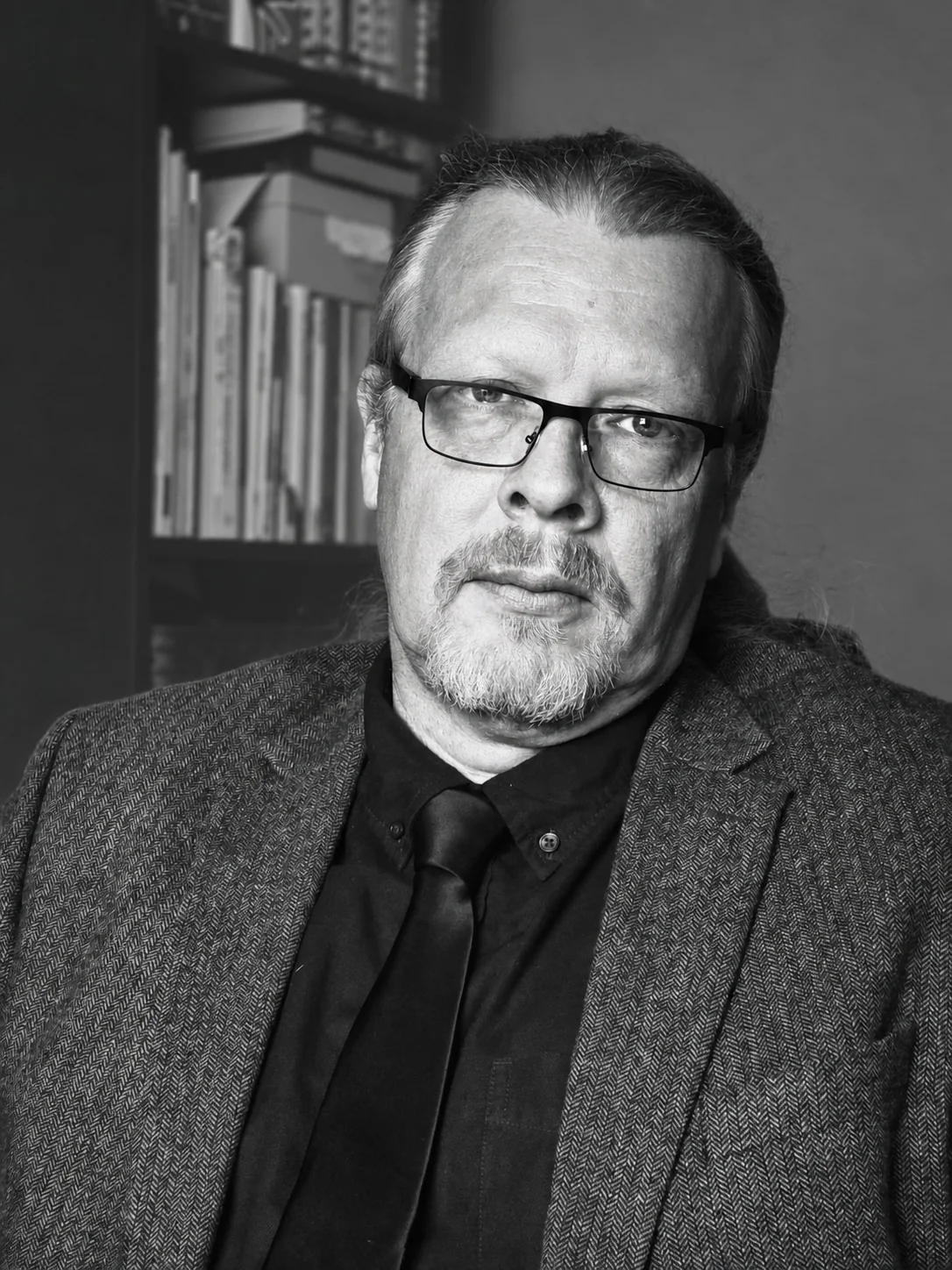
Founder of INGENS
Peter Kacperek
I try to understand systems before changing them.
INGENS did not grow out of a business plan or market analysis. It grew out of observation.
The observation
Why INGENS began
Over the years, I have had the opportunity to look at organisations from many different perspectives: technical, operational, information technology, business and human. Regardless of industry, company size or the nature of the problem, the same pattern often returned.
Information was available.
Specialists were available.
Technology was available.
And yet the problems kept returning.
Most often, the organisation did not lack knowledge or tools. What was missing was the connection between people, information, responsibility and decisions.
That observation is where INGENS began.
A systems perspective
Looking beyond individual parts
My education has never been limited to one discipline. It has included technical, information technology, business and organisational fields, and each subsequent experience broadened the way I look at organisations and complex problems.
Instead of analysing technologies, processes, people or departments in isolation, I became increasingly interested in how all these elements influence one another.
Why do organisations make certain decisions?
Why do well-designed processes stop working?
Why do similar problems appear in completely different industries?
And above all: why do so many problems return despite successive implementations, changes and investments?
Understanding before action
The situation comes before the solution
My first step is rarely to look for a solution. I begin by trying to understand the situation as a whole.
How does information flow?
Where are the constraints?
How are decisions made?
Who sees the full picture, and who sees only a fragment?
What assumptions were made, and do they still hold?
Only then is it time for analysis, choosing tools and taking action.
The problem should define the solution, not the other way around.
Causes, not blame
Understanding the mechanism
I am not interested in finding someone to blame. I am much more interested in understanding why an organisation arrived where it is, and what needs to change so that the problem does not return.
I can prepare notes, diagrams and analyses. I can point to a bottleneck, calculate indicators and describe the constraints of a system.
Finding the place where something stopped working is rarely enough. Until we understand the mechanism that led to the problem, we are very often removing only its symptoms.
Repair, simplify or rebuild
Giving useful systems a second life
I like repairing systems, processes and solutions that still have value and can be given a new life.
Not every organisation needs a new tool, more procedures or another supplier. Sometimes it is enough to clarify responsibility, improve the flow of information, remove unnecessary elements or restore the logic of how a system works.
If an existing solution cannot reasonably be repaired, however, there must be readiness to build it again without repeating the problems that led to the earlier situation.
The aim is not to keep an old system at any cost, or to introduce a new one simply because it is new. The aim is to find a solution that is simple, healthy and appropriate to the organisation's real needs.
Decision over indefinite uncertainty
Clear enough to move forward
Not every decision will be perfect.
In practice, prolonged uncertainty often costs an organisation more than an imperfect decision made at the right time.
That is why I try to bring the situation to a point where the available information, risks and constraints are clear enough for the organisation to take the next reasonable step.
This is not about acting without thought. It is about avoiding a situation in which an organisation remains suspended for too long between the problem and the decision.
Clarity over complexity
Simple in daily use
A well-functioning organisation does not need to be free from complexity.
It should, however, be simple for the people who need to perform their tasks and make decisions within it.
Everyone should know what they are responsible for, what information they should pass on and what they need from others.
Autonomy, measurability and formalisation make sense only where they genuinely support the way the system works. They should not be introduced mechanically or treated as universal solutions.
Complexity should be managed, not pushed onto people.
What consulting means to me
Understanding before recommending
I am not interested in listening to a problem only to match it with a ready-made product or service.
First I try to understand the situation. Then I try to explain its mechanisms in a way that allows everyone involved to see the same picture. Only then can a direction of action be indicated responsibly.
Sometimes that direction will be a specific implementation. Sometimes a process change. Sometimes the involvement of an additional specialist.
And sometimes the most honest answer is that the organisation does not need what it originally intended to buy.
The measure of success
The question that matters
I do not measure a project's success by the number of meetings, reports or implementations.
Has the problem stopped returning?
A practical next step
The next reasonable step
Not every complex problem requires a large project immediately.
Sometimes the most important result of the first conversation is to organise the situation, separate facts from assumptions and define what should happen next.
If an organisation is in a situation that has become more complex, costly or uncertain than it should be, it may be worth starting with exactly that kind of conversation.
You do not always need to know the whole solution immediately. Sometimes it is enough to know what the next reasonable step should be.